
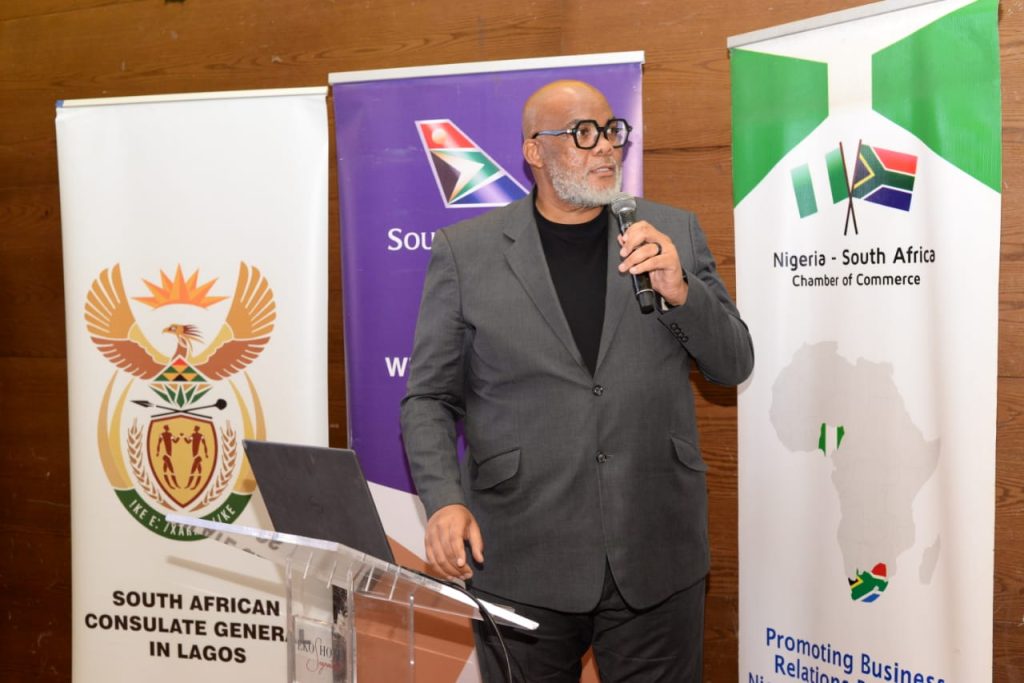
Reflections from Prof Bobby Moroe’s address at th Nigeria-South Africa Chamber of Commerce Breakfast Meeting
There is a street in Soweto that carries the weight of history like few others in the word. Vilakazi Street once housed two Nobel Peace Prize Laureats – Archbishop Desmond Tutu and Dada Nelson Mandela – a rare distinction shared by no other dstreet on earth. It was this image that South Africa’s Consul-General and Acting High Commissioner to Nigeria, Prof Bobby Moroe, invoked to open a conversation that was as much about the future as it was about legacy.
Addressing business leaders and Policymakers at a recent breakfast meeting hosted by the Nigeria-South Africa Chamber of Commerce, Prof Moroe delivered a message that moved effortlessly between the poetic and the pragmatic – a call for two of Africa’s largest economies to move “from sentiment to strategy, from brotherhood to blueprint.
A World in Flux
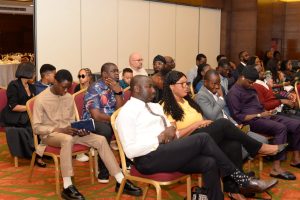
Prof Moroe did not shy away from naming the moment plainly. The global order that has defined the last three decades, he observed, is shifting. Multilateralism is giving ground to Unilateralism. Global supply chains are being restructured. Technology and finance are increasingly instruments of geopolitics rather than neutral tools of progress. And too often, he noted, the Global South is spoken about rather than spoken with.
It’s a sobering diagnosis – but not, he was careful to stress, a cause for alarm. Rather, it is a call for clarity. “The question is not whether the world will change, “he said. “It will. The question is who will shape that change.”
Accountability as the Foundation of Trust
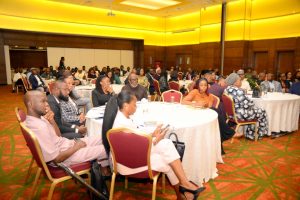
No conversation about Nigeria-South Africa relations can ignore the strain that outbreaks of xenophobic violence have periodically placed on the relationship between the two nations and their people. Prof Moroe addressed this directly and candidly– an acknowledgment that lent the rest of his address considerable credibility.
He confirmed that over 80 individuals connected to recent incidents of violence have been arrested and are currently before the courts, facing the full weight of the law. Beyond accountability for past incidents, he pointed to a more reassuring development: the South African Government has instituted a dedicated mitigation strategy specifically deigned to prevent any reoccurrence.
This matters. Partnerships built on shared aspiration are only as strong as the trust underpinning them, and trust is built not through avoidance of difficult truths, but through demonstrated accountability and forward-looking safeguards. By addressing the issue head-on rather than glossing over it, Prof Moroe signalled that the vision he was about to lay out – of deepened trade, mobility and cooperation between the two nations – rests on a foundation of justice for victims and genuine institutional commitment to protecting Nigerians and other foreign nationals living in South Africa going forward.
It was, in many ways, the quiet backbone of the entire address: before speaking of bridges to build, he first spoke of the cracks that must be repaired.
Shared Challenges, Shared Aspirations
For Prof Moroe, the path forward begins with recognising just how much Nigeria and South Africa have in common – tow nations that, despite their geographic distance, share strikingly similar terrain: the challenges of youth unemployment, inequality, energy transition, food security, digital transformation and climate change, alongside common aspirations for industrialisation, innovation and restored dignity for their people.
From Symbolism to Substance
What made the address resonate wasn’t just its eloquence, bur its specificity. Prof Moroe outlined concrete threads that could weave the two nations closer together:
Culture as currency – encouraging co-productions between Nigeria writers and South African producers, carrying African stories to global audiences on African terms.
Connected skies and markets – strengthening air links through South African Airways and deepening trade integration under the African Continental Free Trade Area ( AfCTA).
Digital sovereignty – ensuring that Africa’s internet infrastructure and data serve African interests first.
A unified voice on the global stage – aligning positions on trade, peace, technology and migration before African nations arrive at international forums, so that the continent speaks with one coherent voice rather than several competing ones.
A Case for Global Institutional Reform
Perhaps the most striking portion of the address was Prof Moroe’s call for reform of global governance structures. He argued that the composition of the United Nations Security Council – largely unchanged since 1945 – no longer reflects the realities of today’s world. With a population of 1.4 billion people, African holds neither a permanent seat nor veto power at the UN’s top table.
His call was direct: two permanent seats for Africa, “not as a favour, but as a right.” He extended tis argument to the Bretton Woods institutions as well, calling for voting rights that reflect today’s economic realities rather than those of 1944, alongside climate finance that moves from promises to predictable, actionable funding and a debt framework that gives African nations genuine fiscal breathing room.
These are not new debates in international Policy circles – but coming from a senior South African diplomat addressing a Nigerian business audience, the framing carried particular weight: this is not a call for charity, but for parity.
Building the Bridge
Prof. Moroe closed with an image that captured the spirit of the entire address — a vision of history remembering Nigeria and South Africa not as “two giants who stood apart,” but as “two hands that reached across the Limpopo and the Atlantic to build a bridge.”
A bridge, he said, of trade — where goods and ideas move freely. A bridge of people — where dignity travels with every passport. A bridge of shared solutions — where African problems are met with African answers.
It’s an ambitious vision, and one that will require sustained institutional follow-through well beyond any single breakfast meeting. But paired with a candid reckoning on accountability and protection, it offered something increasingly rare in international discourse: a genuinely optimistic, forward-looking case for South-South cooperation — one grounded not in nostalgia or avoidance, but in shared strategic interest and mutual trust, honestly earned.
As Prof. Moroe put it in his closing words: “Let us leave this room and build that bridge together.”
What role do you think business communities can play in strengthening Nigeria–South Africa ties?
Share your thoughts in the comments below